
684 view(s)
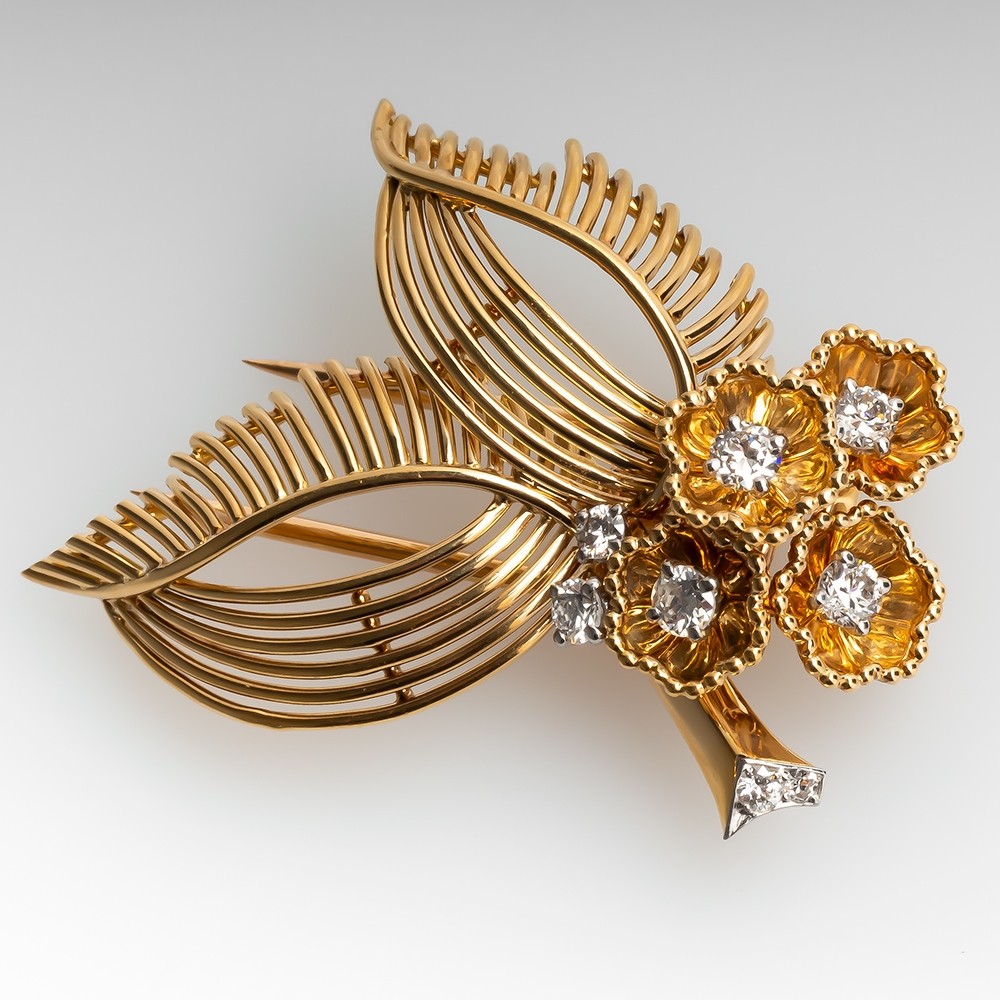 Tried and true brands like Cartier, Van Cleef & Arpels, and Tiffany & Co. remain the standard for vintage jewelry investment pieces. Exquisite craftsmanship, superior materials, and the solid history of these brands serve as just a few keys to maintaining their value over time. Photo ©2020 EraGem Jewelry.
Experts agree that buying secondhand vintage jewelry investment pieces from reputable sources offers a way to buy what you love while at the same time potentially adding to your asset portfolio. Keep in mind, I'm not an investments expert. With this article, I aim to offer you four tips I gleaned from experts in the field to get you started on your jewelry investment journey. Before you take any next steps, I urge you to turn to your personal investment adviser for counsel.
Tried and true brands like Cartier, Van Cleef & Arpels, and Tiffany & Co. remain the standard for vintage jewelry investment pieces. Exquisite craftsmanship, superior materials, and the solid history of these brands serve as just a few keys to maintaining their value over time. Photo ©2020 EraGem Jewelry.
Experts agree that buying secondhand vintage jewelry investment pieces from reputable sources offers a way to buy what you love while at the same time potentially adding to your asset portfolio. Keep in mind, I'm not an investments expert. With this article, I aim to offer you four tips I gleaned from experts in the field to get you started on your jewelry investment journey. Before you take any next steps, I urge you to turn to your personal investment adviser for counsel.
Heed the Advice of the Jewelry Investment Experts
Buy Second Hand. The UK writers at Moneywise Magazine warn that paying retail on a designer jewel comes with a high price, literally. Not only do retailers mark up their prices as much as 100%, you often pay even more for the brand's advertising campaigns, storefronts, and sales staff. (source) As a result, the moment you take your jewel out of the showroom, its resale value drops as much as 70%. Granted, brand new pieces manufactured by top brands (think Cartier, Tiffany, etc.) often retain their value. However, you face a wait of at least 30 years for a contemporary piece to appreciate sufficiently in value. (source) Instead of spending top dollar, experts recommend purchasing from reputable jewelers who sell antique, vintage, and estate jewelry. Question the Seller. This brings me to the next tip from the experts. Ask your jeweler lots of questions. Specifically, ask about treatments and enhancements made to the piece's gemstones. Also, ask to see any paperwork and certifications. Specifically, ask to see certifications from trusted labs. Finally, ask about the jewel's history. Who owned it before the dealer? Does the paper trail tell a credible story of origins and authenticity? (source) Of course, in order to ask such questions you need to understand the difference between a good answer and a sketchy answer. For this reason, the experts recommend conducting your own research before you set foot in a jewelry store.Conduct Your Own Research
Worthy recommends learning what the different markings on jewelry mean. In particular, understand the hallmarks for gold, silver, and platinum. Also, learn which brands retain their value and/or appreciate over time, and take the time to learn about their stamps and hallmarks. Other experts recommend learning how to use a jeweler's loupe, the small magnifying glass used by appraisers and jewelers. Expertise in using a loupe affords you the ability to compare the actual gemstones in a jewel with its certification papers. Magnification allows the eye to see identifying characteristics, as well as flaws and any damage. Finally, Bloomberg recommends turning to the big-name auction houses for important information. The sheer volume of vintage and antique jewelry that run through auction houses like Sotheby's and Christie's offers you a host of information. For each jewel listing, they give detailed historical accounts, gemstone and diamond information, as well as access to certifications and lab results on key gemstones. Furthermore, auctions offer a peek at how the market currently performs for certain types of jewels. (source) Studying the results of both the large sales and the smaller online jewelry sales shows which pieces collectors buy and for how much. This leads to my next tip, Know What Grows!Know What Grows
Timeless Eras
According to the experts at This is Money, a UK financial news site, the timeless designs of the Art Deco era afforded the greatest returns as recently as 2017. (source) They also recommend collecting jewels from the Belle Epoque (late 1870s), as well as from the Retro period. Also known as Mid-Century, the Retro period spans the decades between the 1930s and 1950s. Other timeless jewelry eras include Art Nouveau and Georgian.The Elite Ateliers
The experts further agree that a handful of elite jewelry ateliers maintain their worth, sometimes even increasing in value over time. According to Worthy, this list includes Tiffany & Co., Van Cleef & Arpels, Cartier, and David Yurman. Moneywise agrees and adds Bulgari, Christian Dior, and Boucheron to the list. (source) Furthermore, they recommend adding jewelry investment pieces from specific UK designers working in the 1960s. Specifically Stuart Devlin, Andrew Grima, and John Donald. These names represent the tip of the iceberg in collectible jewelry designers worth researching. I recommend doing a broader search on collectible jewelry designers. Particularly, pay attention to those who routinely sell well at auctions.Diamonds, Metals, and Gemstones
Of course, a discussion of what grows would not be complete without mentioning gemstones and diamonds. According to Worthy, diamonds over 1 carat perform the best. However, cut and clarity sometime trump size. The New York Times reminds collectors that scarcity adds value. Specifically, they advise learning about colored diamonds. (source) When it comes to metals, the precious metals (gold, platinum, and silver) traditionally perform well. However, according to Worthy, gold remains king, as long as you choose 14k or greater. When it comes to color, emeralds, sapphires, and rubies remain popular. Eye clean stones over 5 carats, in particular, tend to retain their value. (source) Of course, treatments, enhancements, cut, and clarity all play a role in value retention, so learn as much as you can about these factors before you make a purchase. In addition to the big three, some of the other colored gemstones stand out. These include location-specific gems like tanzanite, as well as historically significant gemstones like kunzite and jadeite. (source) I hope this article has whet your appetite for the exciting prospects involved in collecting jewelry investment pieces. Remember, do your homework and consult your own trusted experts before making any jewelry investment pieces. The more you look at jewelry and read about it, the more confident you will become. Please don't hesitate to reach out and ask any questions you might have. We're here to help! ~Angela Magnotti Andrews2020-01-20 23:48:56
128 view(s)